Brand Design
Your work delivers.
Your image doesn't.
Solid product. Happy clients. A team that gets things done. But every time a prospect is choosing between you and a competitor, the same thought creeps in: we should look more credible than this.
Table Of Contents
Xervum works with founders who build for the long run. People who value systems over shortcuts. Who want autonomy — not a vendor they can't get rid of. Who plan in 18-month arcs, not 18-day sprints.
If you're shopping for the lowest price, Xervum is not the right fit. If you want "something nice" with no strategy behind it, Xervum is not the right fit. If you need a designer who nods and executes without pushing back, Xervum is not the right fit.
For companies done patching things together.
Your brand is working against you
Not your product. Not your team. Not the market. Your brand.
The logo might be fine. But without a system backing it up, every touchpoint tells a different story. Every piece of content starts from scratch. And while you figure it out, the market is already forming an opinion. The wrong one.
One week. For a simple graphic.
You need a visual — something quick. The agency gets back to you, but they have their timelines. A few days later the file lands in your inbox. You're about to publish, then notice the copy needs a small tweak. Except you got a flat jpeg. You can't touch the text. Back to the agency. Two more days.
32% of content requests take over a week to fulfill. And that's not just an external-vendor problem — the number holds for in-house work too.
The issue isn't who does the work. It's that every time, you're starting from zero. No shared criteria. No up-to-date references. No system. And when there's no system, the same thing gets redone three times before anyone notices.
It's friction you can't see — but you feel it every time an urgent asset is stuck in limbo, every time your team is waiting on you, or you're waiting on someone else. For a decision that should already be made.
How many versions of your brand are out there?
77% of companies produce content that's off-brand. The reason is simple: every piece is made by a different person, in a different context, under a different deadline. Every problem gets treated like it's the only one. Site feels slow — rebuild the site. New products — update the catalog. Logo looks dated — swap the logo. Each fix tackles the loudest symptom and ignores everything around it.
The result is a brand that's scattered — unrecognizable even to the people who built it. Colors that are close but never quite right. Fonts that shift from one document to the next. Layouts that have nothing in common. The damage isn't cosmetic. It's strategic: the brand gets diluted, harder to remember, easier to confuse with someone else. The value is there, but it's invisible. And what's invisible doesn't get chosen.
Your company grew up. Your brand still looks like day one.
The product is better. The team is bigger. Clients are happy. But your materials still reflect the early version — the improvised one, the let's just get something out there version.
The result? You look smaller than you are. Less credible. Less experienced. Every time you send a proposal, part of you wonders whether the client will notice the gap between how you appear and the quality you actually deliver.
Who are you? Why you? You have ten seconds.
You should be able to answer without thinking. But every time, you improvise. You search for the right words. You hope they pick up on the value between the lines.
They won't. They don't have time to read between the lines. Ten seconds. You're either clear, or you're one of many.
Your product? One of a kind. Your brand? One of many.
Your product has an edge. Your approach is different — you know it. But if your materials, your presentations, your communication all look generic, the client sees just another option.
When you look the same as everyone else, the only thing left to compete on is price. Even when you're worth more.
The price you pay every day that never shows up on an invoice.
Every day your brand sends mixed signals, you're paying for it. Not in your accounts — in missed opportunities.
It's the proposal that needs one more call to convince. The content that gets clicks but not trust. The lead that goes cold and you never quite know why.
Hard to say how many opportunities slip away like this. Nobody sends you an email saying "I didn't choose you because you looked unreliable."
It's debt. Brand debt. And like any debt worth the name, the longer you sit on it, the more interest piles up. At some point, the bill comes due.
Right now
you're doing the work your brand should be doing for you.
Every piece of content takes longer than it should. Every asset needs fixing, rewriting, adjusting. You send a proposal and tell yourself: as long as it's clear. Maybe it is. But clear isn't enough. If it doesn't signal solidity, you pay for it in negotiation.
You spend money driving traffic to pages that don't convert. The ads bring clicks. The site doesn't build trust. Small frictions, barely noticeable — until they stack up.
One year from now?
the gap is visible
While you're explaining who you are for the fifth time this week, someone else is letting their brand do the talking. Their deck closes deals. Yours needs you on a call to fill in the gaps.
And it's not just leads you're losing — it's talent. That person you wanted on the team? They're working for your competitor now. Trust forms in seconds. Too early for words to make up the difference.
Five years from now?
rebuilding costs three times as much
Off-target inquiries. Clients who negotiate every line. Projects that drain more than they return. You keep asking yourself why you attract the wrong people.
You finally decide to deal with it — but swapping the logo won't fix it. You need to rebuild the foundations. Years of materials to redo. A team to realign. A pile of assets with nothing holding them together.
Meanwhile, the competitor who just looked more polished five years ago has become the reference point in your market. Perception did its work. While you were postponing, they were investing. While you were patching, they were building.
At that point, no redesign is going to close the gap.
A brand that works while you sleep.
Imagine opening your sales deck before an important call and not feeling that small sting of embarrassment. No more "whatever, it's the substance that counts." This time you look at it and think: I'm proud of this. This is us.
Imagine your team putting together a post, a proposal, a brochure — without waiting days for a single edit. They know the criteria. The result comes out consistent and professional.
Imagine sending your brand guidelines to a new vendor and getting the right output on the first try. The rules exist, they're clear, and they work.
Imagine prospects showing up to the first call already half-sold. The conversation lasts 25 minutes instead of 50. You don't need to explain who you are — the brand already did it for you.
Years of watching the same mistake on repeat.
In 12 years in this industry, I've seen the same pattern play out dozens of times. Agencies tear apart a brand identity "to give it a refresh" and hand back something that looks great on paper — but has nothing to do with who the company actually is. Companies chase visual trends and lose their personality in the process. Excellent logos get slapped carelessly across social media, presentations, websites — until all the initial value bleeds out within a few months.
And then there are the quieter stories. The founder who's embarrassed to share their own website. The one who doesn't send a proposal because "we don't look the part anyway." The sales rep who lowers the price because "with the site we have, I can't ask for more."
Nine years of putting it off. Then the bill arrived.
I've been in this industry since 2013. Went freelance in 2017. For nine years I worked under my own name, knowing that sooner or later I'd need to build something more structured. A real brand. Clear positioning. An identity that could speak when I wasn't in the room.
There was always something more urgent. Or more interesting.
Some clients paid me more than I quoted. "I hugely appreciate working with you, of any designers I have come across this decade" — that's something I actually heard. Others compared me to Canva. Same market. Same skills on my end.
The difference? Referrals got the value because they'd already seen the work I did for someone else. They showed up knowing what to expect. Everyone else started from zero — and the only thing they had to judge was how I presented myself.
There was a gap between who I was and how I looked. I knew it. The cobbler's children have no shoes, I'd tell myself — almost like it was a badge of honor. After all, work kept coming in.
Then came 2025. Revenue dropped 47%. I only looked at the numbers at year-end, and when I saw the figure, I wasn't surprised. I'd known for months. I just didn't want to say it out loud.
I'd been paying for that gap every single day — in opportunities that didn't close, in the kind of clients I attracted, in the weight of every negotiation.
It was time to do for myself what I'd been doing for everyone else.
That's where Xervum started.
A repeatable system.
When who you are, what you say, and what you show the world all speak the same language, something clicks. A rare kind of coherence. People feel it, even if they can't name it. The same is true for your brand.
To get you there, Xervum follows a process built around three phases.
Phase 1
Strategy
Before touching a single pixel, Xervum works with you to figure out who you are, where you're headed, and who needs to hear from you. The output is a clear direction: positioning, decision criteria, priorities.
At this price range, strategy usually doesn't exist. Most designers ask "what colors do you like?" and start pushing pixels. I always start here, because a logo without strategy is decoration.
Phase 2
Identity
Logo, palette, typography, graphic elements. But more importantly: the rules that hold everything together. A great logo applied badly becomes forgettable. A decent logo applied with consistency beats a great one used at random.
Phase 3
Brand materials
This is where the brand becomes real: pitch decks, social profiles, website, email signature. This phase moves fast because the decisions are already made. You execute. You don't reinvent.
A consistent brand adds 10–20% to your revenue.
Companies with a consistent brand earn 10% to 20% more on average. You're reading this on a page that sells branding, so take it with a grain of salt. Maybe that number is inflated. Maybe it doesn't apply to you.
What that stat doesn't capture is the weight that disappears. That constant background hum of "this doesn't represent us" — the one that makes you hesitate where you should feel confident. A brand that doesn't work drains energy just to stay credible. You check the link three times before sending it. You open the deck and worry about how it looks instead of focusing on what to say. When the brand works, that energy is freed up. And you can put it where it matters: growing.
59% of consumers prefer buying from brands they recognize. When every touchpoint speaks the same language, the client walks into the call already half-convinced.
You don't have to explain who you are anymore. The conversation takes 25 minutes instead of 50. The quote? Accepted without pushback. The value was already clear before you said a word.
Negotiations take half the time. And close before you open your mouth.
Every impression compounds instead of scattering.
It takes at least 5–7 consistent touchpoints before a brand sticks. Every misaligned piece of content is, at best, a wasted chance. At worst, it chips away at credibility.
When the system works, every piece reinforces the whole — and works for you. A post made in 5 minutes, a slide, even a plain email signature.
87% of consumers are willing to pay more for brands they trust. Think about that for a second. The more consistent you are, the faster someone trusts you. When your target trusts you, you compete on perceived value — not on cost. Raising prices becomes a natural consequence, not a gamble.
Prices go up. Discomfort goes down.
The right people find you.
Talent, partners, clients. People who know where they're headed attract others going in the same direction.
A consistent brand is a filter: it pushes away who's not a fit and pulls in who is. Less time convincing. More time building.
When the brand doesn't work, every call starts from zero. You have to sell credibility before you even get to sell the service.
When it works, the client walks in with half the questions already answered. The conversation starts from value, not legitimacy. It's the difference between "convince me" and "tell me how you work."
The client shows up half-convinced already.
The team unblocks. No more waiting around.
The guidelines exist. Most decisions are already made. Anyone on the team can produce on-brand materials on the spot.
No more "is this the right color?". No more endless rework. No more waiting three days for a trivial change.
You send the guidelines. The material comes back right. The rules exist, they're clear, and they work.
The trade show booth, the freelance videographer, the agency running your social: they all speak the same language. Without you having to play traffic cop for every piece of communication.
Vendors deliver consistent design on the first try.
Finally, what you show matches what you are.
The pride in your brand materials. Opening the deck before an important call and thinking: "Yes. This is me."
Sending a proposal knowing it holds its own against the other five the client will receive.
Looking at your website and finally feeling it's doing its job. Right now, while you're doing yours.
This is what unlocks when you stop patching and start building.
packages
Three packages. Same system, different depth.
Same method across all three: direction first, then identity, then materials. The only thing that changes is how deep we go.
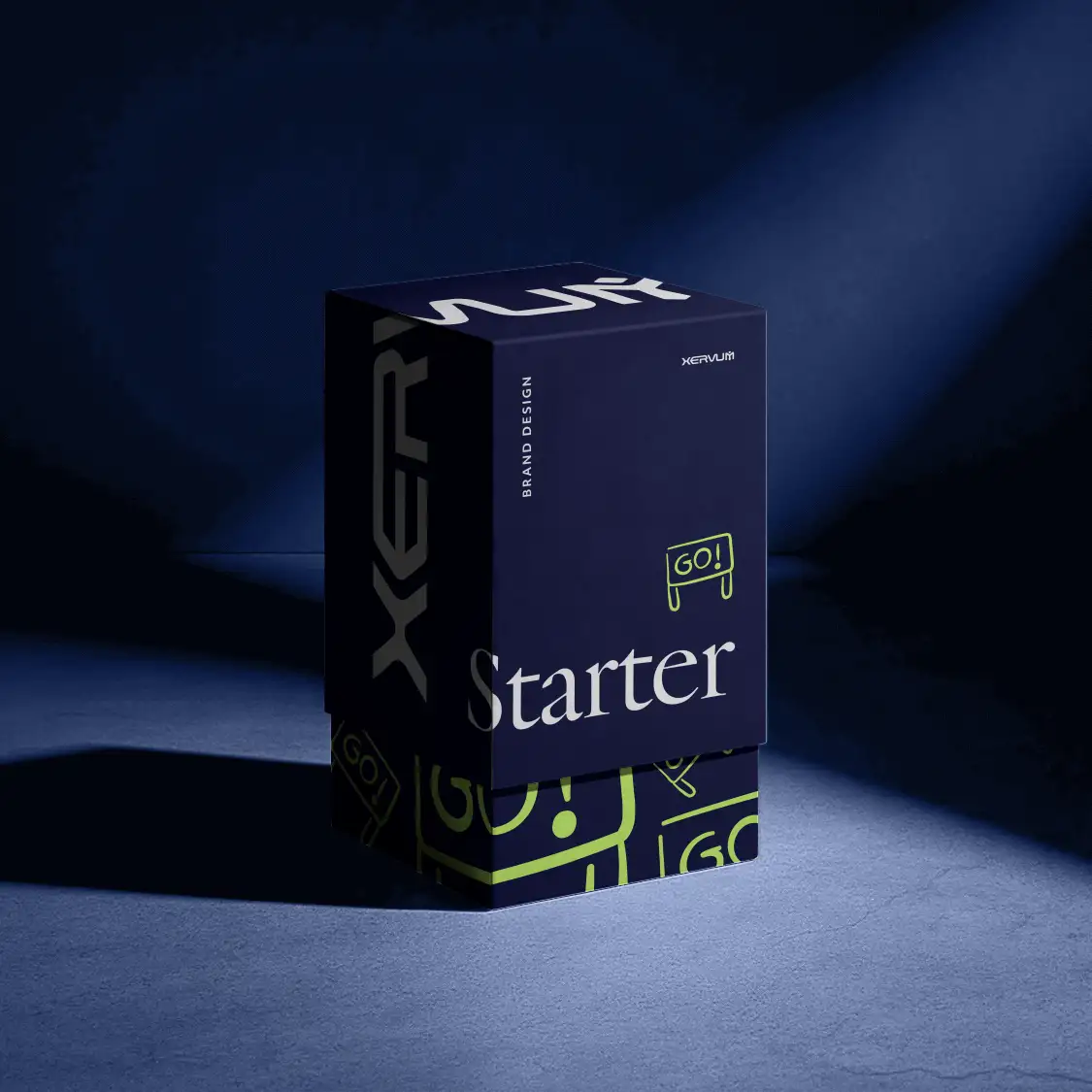
Starter
You've been winging it so far. The logo? Thrown together fast — "I'll fix it later." The email signature? A template you found online. The colors? Whatever looked good that day. The result works, kind of. But every time you send a quote or share a link, you feel it: this doesn't represent you.
Starter gives you what you need to show up professionally from day one. No more "I'll get to it eventually." A foundation to build on — not another band-aid.
Strategy
Guided brand personality form
Results summary: word cloud with key brand attributes
Identity
3 logo directions, with 2 revision rounds
Final logo in all variants and formats
Starter Brand Guidelines (color palette, fonts, style reference image)
Supporting graphic elements consistent with the brand style (e.g. pattern)
Brand Materials
3 simple brand materials (e.g. document templates, static social posts, business card)
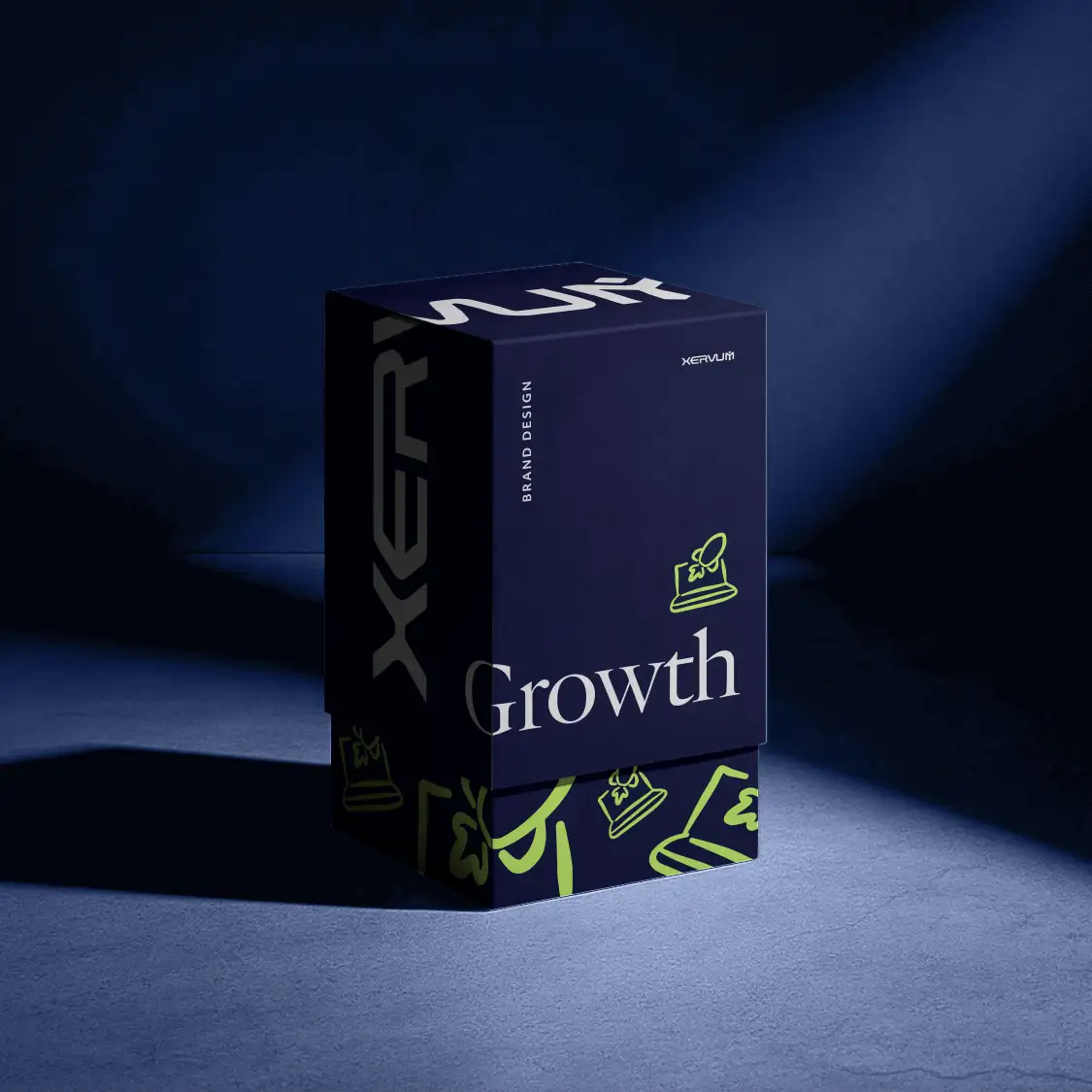
Growth
You've delegated — a collaborator, an employee, an agency. Everyone does their best. But without shared criteria, the brand changes face at every touchpoint. The website says one thing, the deck says another, and the social profiles look like a different company entirely.
The result? It works — enough. But "enough" doesn't close deals. "Enough" keeps you stuck while competitors who look more solid pass you by.
The real problem is there's no direction. Without knowing who you are, what you want to communicate, and to whom, every piece of content is improvisation.
Growth starts there. In a two-hour strategy workshop, Xervum defines the direction with you: positioning, personality, priorities. Then builds a visual identity that reflects it. With guidelines anyone on the team can apply — without calling you every time.
The brand stops looking like an experiment and starts speaking with one voice.
Strategy
Brand Strategy Workshop (2h)
Brand Strategy Lite (.pdf, .md)
Identity
3 logo concepts, with 2 revision rounds
3 brand visual identity concepts, with 2 revision rounds
Final logo in all variants and formats
Supporting graphic elements consistent with the brand style (e.g. pattern)
Brand Guidelines Medium (.pdf)
Brand Materials
6 simple brand materials (e.g. document templates, static social posts)
2 medium-complexity brand materials (e.g. company one-pager, explainer diagram)
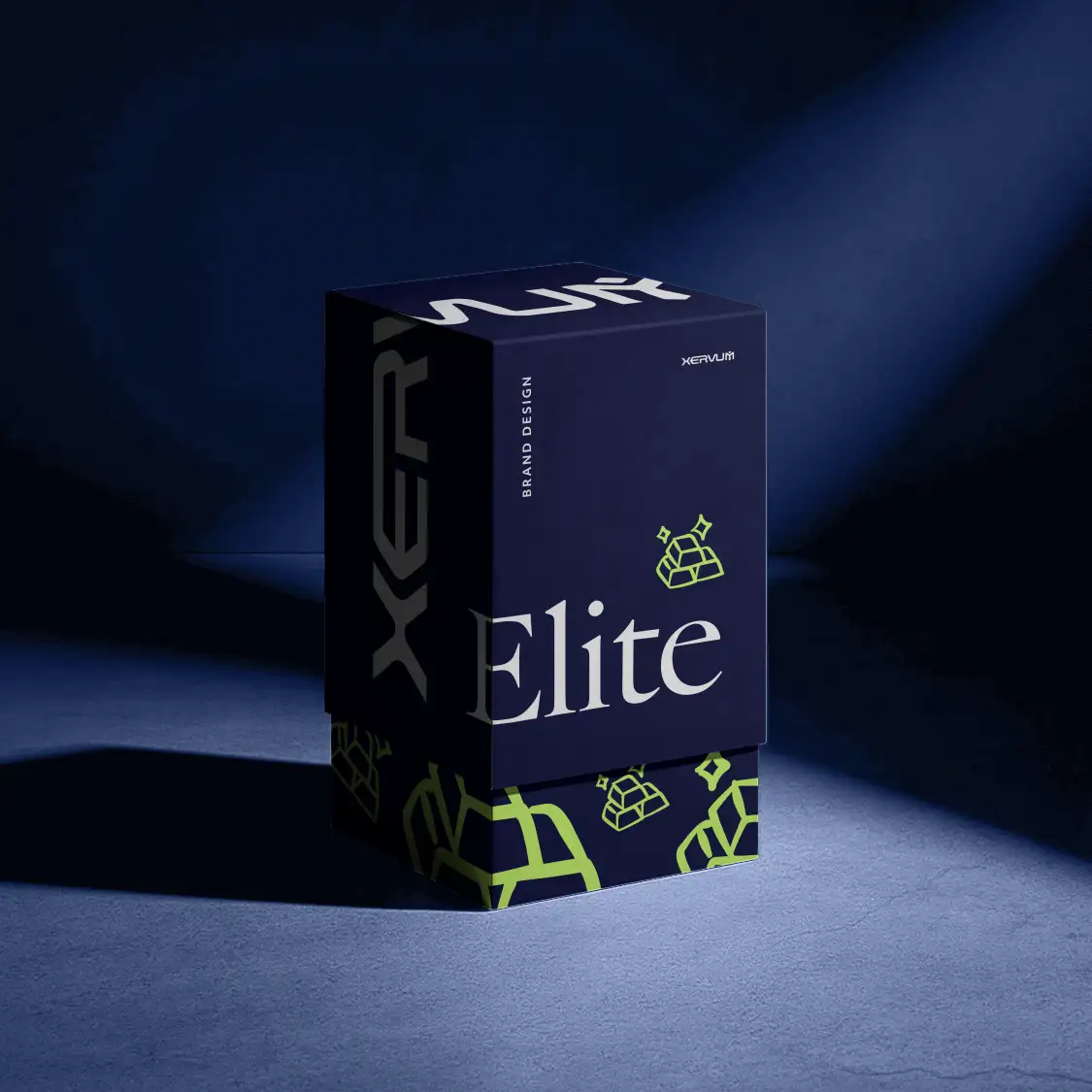
Elite
Internal team, external vendors, collaborators. Everyone interprets the brand their own way. Visuals diverge, messages contradict each other, tone shifts from one channel to the next.
Meanwhile, the stakes keep growing: partnerships, tenders, new markets, new products. But when a prospect Googles you before making a decision, something doesn't add up. The website, the LinkedIn profile, the first results — they don't speak the same language. They look like pieces of different companies.
Without rules, resources spin without traction. Marketing drives clicks that don't convert. The website doesn't build trust. Leads come in, then go cold. And every misaligned piece of content scatters what the previous ones had built.
When competition is aggressive, standing out is a matter of survival.
Elite gives you the system to handle this complexity. Not a list of files — an infrastructure: identity, criteria, documented tone, key materials ready to use. The goal is that ten different people produce content that looks like it came from the same hand.
Every impression reinforces instead of diluting. Every touchpoint builds recall instead of scattering it.
Strategy
Competitor communication analysis — to help you differentiate better (more unique = more recognizable = more effective marketing spend) (.pdf, .md)
2 Brand Strategy Workshops (2 hours each)**
Brand Strategy Document, Advanced (.pdf, .md)
Tone of Voice Document: principles, examples, operational rules (.pdf, .md)
Identity
3 logo directions, with 2 revision rounds
3 visual system directions, with 2 revision rounds
Final logo in all variants and formats
Supporting graphic elements consistent with the brand style (e.g. pattern)
Logo reveal animation, usable in any company video material, e.g. animated social posts (.mp4, .webm)
Brand Guidelines Advanced (.pdf, .md)
Brand Guidelines & Media Kit Online
Brand Materials
6 simple brand materials (e.g. document templates, static social posts)
4 medium-complexity brand materials (e.g. company one-pager, explainer diagram)
2 complex brand materials (e.g. pitch deck, landing page)
*Includes 2 complex brand materials with standard requirements agreed upfront. If the scope grows — more pages, more variants, multilingual, advanced animations, or extra assets — the price adjusts based on the actual requirements.
**Workshops are modular: some clients already have a mission or values in place, others don't. Depending on the situation, Xervum focuses the time where it's actually needed. Workshops are held remotely by default. Multiple stakeholders or team members can join.
Brand Materials
Where strategy stops being abstract
Each package comes with a different number of brand materials. These are the real outputs — where your brand identity turns into something your team can pick up and use.
Basic brand materials
The everyday stuff. When these exist, nobody starts from scratch. When they don't, every piece of content is a guess.
Examples: document templates, static social posts
Mid-complexity brand materials
One page, one message, one job. You send them before a call, leave them after a fair, attach them to a proposal. They have to stand on their own — no one will be there to explain them.
Examples: company one-pager, explainer diagram
Complex brand materials
More sections, more layers, more moving parts. These aren't just consistent — they guide the reader through a clear path, from the first glance to the next step.
Examples: pitch deck, landing page, brochure
Bonus
Bonus: the launch is part of the system.
New brand, same old "check out our new logo" post. That's not a launch — that's a missed window. A rebrand gets attention once. What you do with that attention is up to you. You can show up coordinated from the first second, or scramble to put something together the night before. Every package comes with launch content built on your new brand. Copy, visuals, format — all ready to go. You hit publish and the new identity is already working.
Starter
Brand Launch Post
One social post, done. Copy and visual aligned to the new brand. No last-minute improvisation.
Value: 40€
Growth
Brand Launch Set
Two coordinated pieces: the announcement plus a first real application. The change is visible and immediately credible.
Value: 80€
Elite
Brand Launch Narrative
Animated teaser, static announcement, deep-dive carousel. You build anticipation, reveal the change, and explain the thinking behind it. All with ready-made copy.
Value: 240€
Let's talk money.
By this point, one thing should be clear: this isn't a logo purchase. It's a system that makes your brand work — consistently and recognizably. Next week, next quarter, and three years down the line.
What you're not paying for.
Agency overhead. Status meetings with no status. An account manager relaying your words to someone you'll never talk to. Rework that exists because nobody wrote a proper brief. Project phases designed to pad the invoice. And whatever that ping-pong table in the agency lobby actually costs.
What you are paying for.
A clear direction — so every design decision starts from strategy, not guesswork. A visual system your team can run with, without depending on vendors for every small change. Materials that come back right the first time, because the rules are already in place. And something harder to price: opening your deck before a big call and feeling like it belongs there. Sending a proposal without second-guessing how it looks. Showing up — online, in a pitch, at a trade show — and knowing that what people see matches what you actually are.
What's 5% of your revenue worth?
Consistent branding correlates with a 10–20% revenue lift. You're reading this on a branding page, so take the number for what it is. Not a guarantee — a pattern. Now cut it in half. Then cut it again. Say it's only 5%.
Run the math on your own numbers. €5 million a year? 5% is €250,000. €1 million? €50,000. €300,000? Still €15,000.
The lowest realistic estimate still dwarfs the cost of any package on this page. And unlike a campaign, the system doesn't expire. Year after year, it keeps working for you.
That's before you factor in the hours you stop wasting, the deals that close faster, and the leads that disqualify themselves before taking your time.
So the real question isn't whether branding pays off. It's how much the absence of one is costing you right now.
Xervum takes the risk
What if I don't like the result? (and other fair questions)
You don't pay. Every phase is billed at the end, only if you're satisfied. In practice: Xervum presents three creative directions. Most of the time you like parts of one and parts of another. They get combined, refined together. By the first revision the result is already close. By the second, it's usually done.
Xervum doesn't tear things down. It evolves them. Before anything moves forward, Xervum looks at what you already have. More often than not, there are elements worth keeping and building on. No makeover for the sake of a makeover. The goal is that your customers still recognize you, but think higher of you.
Sometimes small adjustments keep the logo nearly identical but noticeably better. If the logo is already solid, or truly off limits, the system gets built around it. A logo is just one piece. The real work is making everything around it feel coherent.
Estimated commitment: Starter 1–2 hours, Growth 4–6 hours, Elite 7–10 hours. That covers calls, messages, reviewing output, and giving feedback. What Xervum needs from you: one point of contact with decision-making authority, and clear, timely feedback. Xervum takes care of the rest.
Yes. The packages cover the most common scenarios, but every business has its own needs. Some already have a logo and just need the visual system. Some need more applications. Others want to add a website to the project. The discovery call is where we figure out what you actually need. Then you get a tailored quote with scope, timeline, and costs defined before anything starts. No surprises.
One reason is permanent. 12 years of experience shaped a process that removes everything unnecessary. Fixed scope, clear phases, proven method. Less overhead, lower prices than a traditional agency. That's how it works, and it's not changing.
The other reason is temporary. Xervum is a new brand. These are launch prices.
You know what you're paying for before you start. Every package has a defined scope, timeline, and cost. No vague quotes. No surprises mid-project.
You pay at the end of each phase, not upfront. And only if the result holds up. Source files are yours. No vendor lock-in.
And if your problem is a loose screw, Xervum won't try to convince you the whole wall needs replacing.
Because the logo is a small part of what you get. Xervum packages include strategy, a visual system, guidelines, and brand materials.
Timelines also factor in your feedback speed. The estimates are conservative on purpose. Better to set a realistic deadline than to promise something that can't be delivered.
If you just need a fast logo, other services cover that. If you need a system that holds up over time, this is the right place.
These prices won't last.
This is launch pricing. It applies to the next 3 Brand Design projects, then it's gone.
Xervum runs 2 projects in parallel. No more. If you wait, you go to the back of the line.
Why Xervum
The philosophy is in the name: serve. Not hold your files hostage. Not make you come back for every small change. The goal is to build systems that run without Xervum.
Your move
Two options. Close this page, go back to what you were doing. The brand stays as it is. Maybe you revisit next quarter. Or book 30 minutes and find out if working together makes sense.
What happens on the call
A few questions to understand where you stand. A look at your current brand. You walk away with at least 5 concrete points worth addressing.
If the problem isn't branding, you'll hear it. If your logo already works, you'll hear that too. Xervum has no interest in selling something you don't need.
To make the most of the 30 minutes, have some of your existing materials handy. Website, deck, brochure, social posts. The more there is to look at, the more useful your checklist gets.
No commitment asked. Just a conversation.
P.S. Every source file is yours. If Xervum disappears tomorrow, or you just want to move on, whoever comes next picks up right where things left off. No lock-in.
P.P.S. Launch pricing covers 3 projects. After that, the numbers go up. Is this a sales tactic? Yes. Is it also how math works? Also yes.
